
Stablecoins are blockchain-based currencies that are designed for stability and reduced volatility. The most common means for this is, is through some sort of peg to a stabilized asset such as a fiat currency. Stablecoins bring predictability to the otherwise unpredictable market of cryptocurrencies. They allow traders and speculators the ability to exit out of volatile digital tokens into stable currencies without having to cash out of the blockchain ecosystem altogether. Their use on decentralized exchanges enables traders to hold government fiat equivalents such as USD, in digital stablecoins without transacting through a centralized intermediary or holding actual fiat. Thus, stablecoins are an incredibly important support currency for traders, speculators, and token holders. In fact, their growth is directly attributed to the overall growth and market cap of the broader cryptocurrency space.
Types of Stablecoins
Stablecoins manage to hold their values in one of two primary ways:
Fiat-backed – stablecoins that are backed by fiat hold a reserve of said fiat at a 1:1 ratio of each equal-value stablecoin issued. Thus, a USD backed stablecoin like USDC, holds a reserve asset total equal to its circulation of tokens, currently around USD 42.6 billion in total market capitalization. This means that for every USDC in circulation, a US Dollar can be redeemed at a 1 to 1 value. Circle, the issuing authority of USDC works with a network of banks to enable fiat redemption against each stablecoin issued. Traders can deposit USD to receive USDC, or redeem USD by returning USDC. Popular exchanges such as Coinbase, enable 1 to 1 conversion of USDC for USD. Other exchanges such as Kraken, handle USDC like any secondary market token – users must sell USDC to USD through a typical bid/ask order book and exchange this value with secondary market counterparties on the exchange. In either case, the underlying asset is still backed by an audited reserve managed and maintained by Circle.
Algorithmically-based – The second class of stablecoin is one in which the value of the stablecoin is soft-pegged against a fiat currency or other stabilized asset using a software program. The peg is maintained using an algorithm that reacts to market events and relies on a series of smart contracts in an effort to maintain this peg.
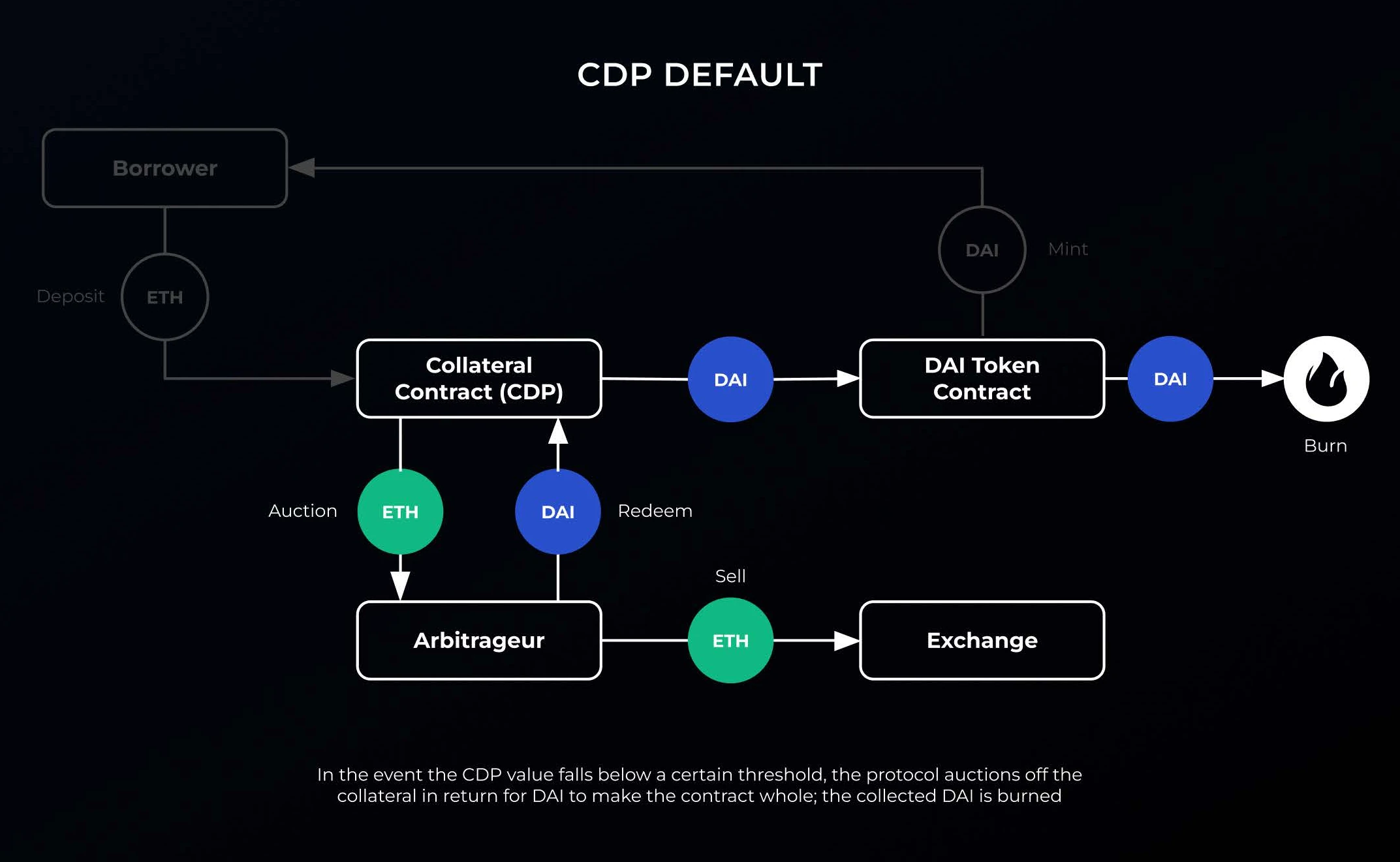
In the case of the currency DAI, its value is backstopped by collateral deposited by participants in the ecosystem. Whenever a participant wishes to mint new DAI, they must supply collateral to a smart contract to guarantee the DAI created. In this way, DAI in circulation is loaned to participants against a collateralized debt position (CDP) funded by the borrower. The MakerDAO protocol which governs how DAI is created requires an overcollateralization at 150% (depending on the currency) of the value of DAI minted to help reduce the risk of default. The algorithm is responsible for using decentralized Oracles to calculate the market price of the collateral currency to determine the proper amount of the deposit. It typically also requires collateral that has a strong secondary market with ample liquidity, enabling the protocol to redeem the DAI equivalent should the borrower default on their obligations. Based on our research, the DAI protocol does not take into account the real-time liquidity or volatility of assets used in its CDPs, instead relying on a decentralized consortium of token holders to make changes to the protocol’s rulesets.
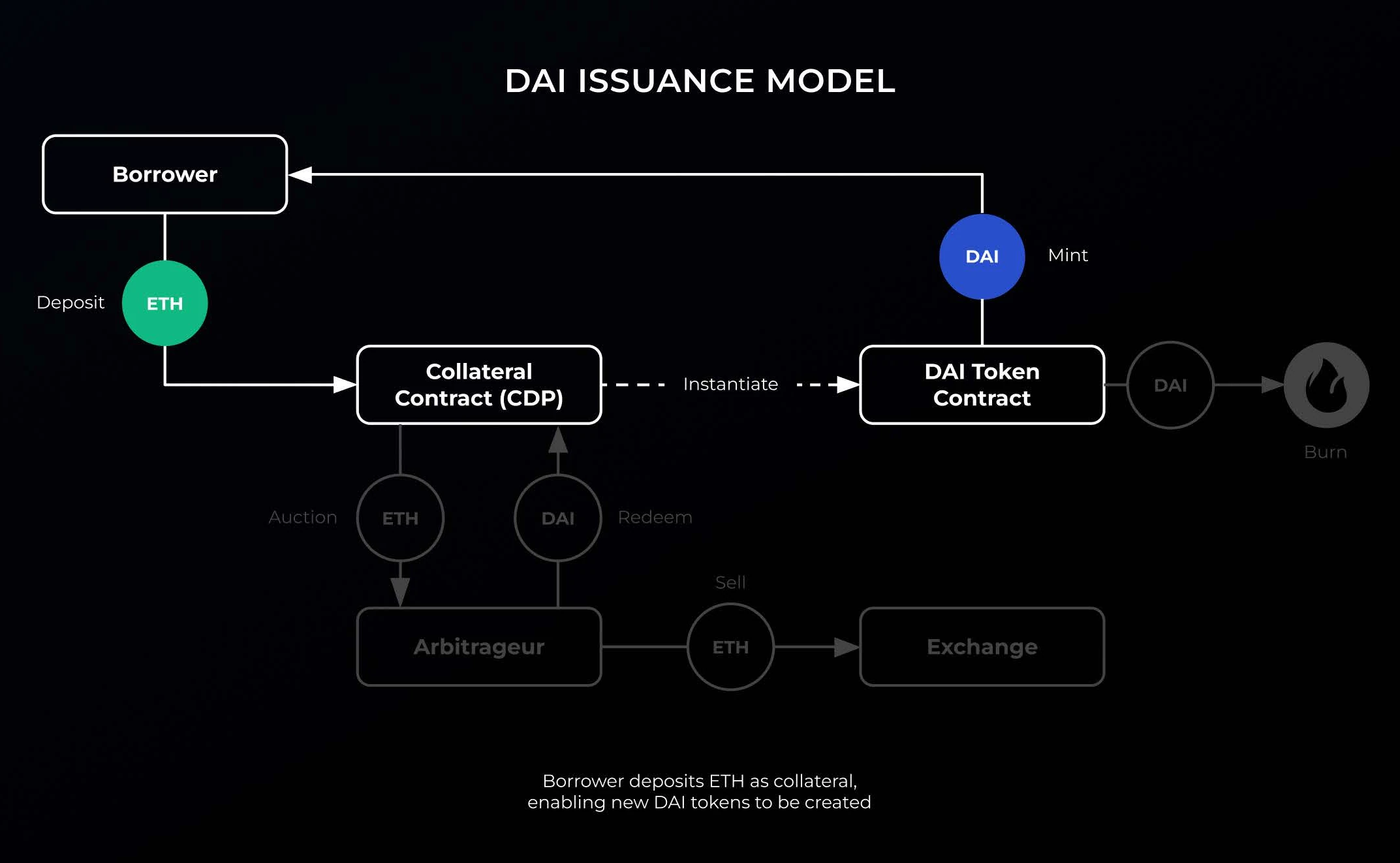
However, it is important to note that all of this is being handled by decentralized smart contracts created by the MakerDAO protocol. A sudden and precipitous decline in both the value and secondary market liquidity of a token used as collateral could prevent the liquidation of the contract at the issued value, causing DAI to lose its soft peg. Additionally, compromises in the contract code or errors in its deployment or execution may cause DAI to lose its peg. Because the value is DAI is backstopped by a basket of volatile currencies and their fungibility in the secondary market, DAI itself is subject to the same market risk as the currencies held in its CDPs.
Another well-known, so-called stablecoin was UST (TerraUSD). UST is an algorithmically backed stablecoin that used a combination of BTC and LUNA (Terra), its own natively issued currency, to create a soft peg against the US Dollar. The protocol enabled traders to arbitrage UST against LUNA to help maintain the peg.
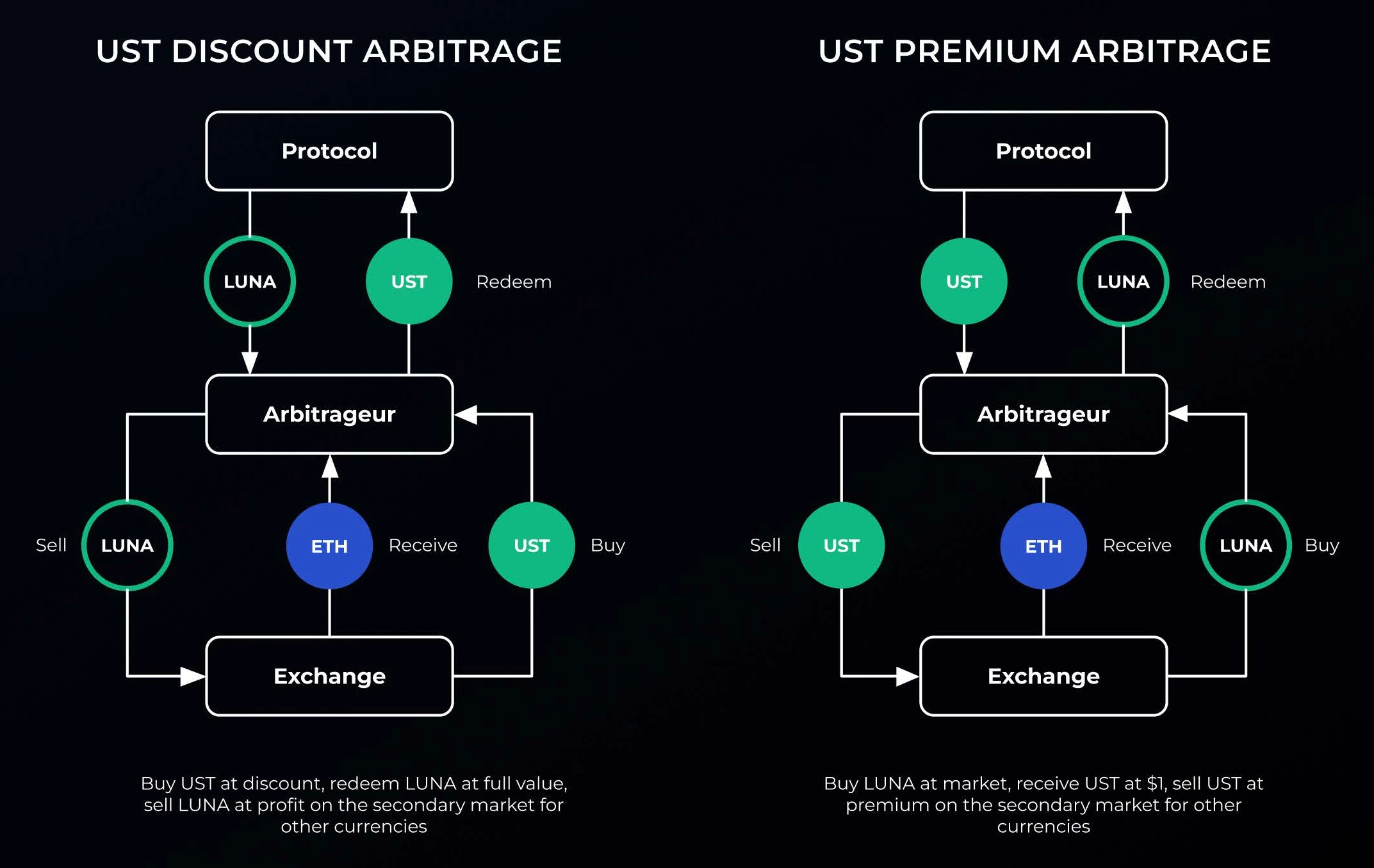
Whenever the price of UST fell below 1.00 US Dollar traders could buy it at a discount and redeem it for LUNA at the equivalent of 1.00 USD, earning the spread as profit. Similarly, whenever the price of UST rose above 1.00, the equivalent amount of UST could be redeemed from exchanging LUNA at a redemption value of 1.00 USD, enabling traders to sell UST for a profit on the secondary markets. In this case, the algorithm was responsible for enabling the purchase and redemption of UST and LUNA at an artificially pegged price equivalent to 1.00 USD. The main issue with this construct is that the reserve asset, LUNA was not backed by anything other than the confidence of the secondary market. When UST falls in price, the protocol relies on traders to arbitrage the price decline by accepting LUNA. In a stable market, traders can exit their LUNA position at a profit. However, this mechanism relies on two important scenarios to remain balanced.
- The value of issued UST on an aggregate of its total market capitalization should not decline more than the secondary market liquidity of LUNA (i.e. where liquidation of LUNA would cause slippage in excess of the discount on UST)
- LUNA’s secondary market liquidity must remain stable enough to enable traders to sell out of their positions at a profit
The challenge with the above is that they are not non-correlated, as they might be if the reserve asset was some other mainstream token such as BTC or ETH. It seems Terra understood this to some extent as it backed the Luna Foundation Guard with some $3.5 billion worth of BTC, however, this was just a fraction of the protocol’s total obligations, worth just 18.6% of UST’s market cap before its collapse. Furthermore, BTC itself is a volatile asset with no backing of its own. It too could fall substantially reducing its effectiveness as a reserve currency.
In the above scenario, a rapid decline in confidence not only affects the value of UST, but also the value of its related token, LUNA. Since LUNA's value serves as a backstop to support UST's peg, a drop in its value could have synergistic and runaway effects on UST and LUNA alike, an event we see play out catastrophically in May of 2022.
In essence, poorly constructed algorithms can rely on a web of interrelated and correlated currencies that could topple like a house of cards. Traders should be acutely aware of the types of stablecoins they are holding and the risks associated with them. It may seem counterintuitive to create a stablecoin that is backed by the very same tokens it is designed to protect against, especially when USD and other fiat-backed stablecoins exist.