Protocol Owned Liquidity is a concept pioneered by a project called Olympus DAO in which a project’s tokens are issued to individuals in exchange for a mainstream currency such as ETH or USDT. To encourage sales, these tokens are sold (through a concept called bonding) at a discount of 5-10% to their public price. Thus, such tokens should already exist on a DEX for a public price to be available. To prevent immediate arbitrage, the protocol may enforce a lockup period of a week or more before the tokens are released to the buyer.
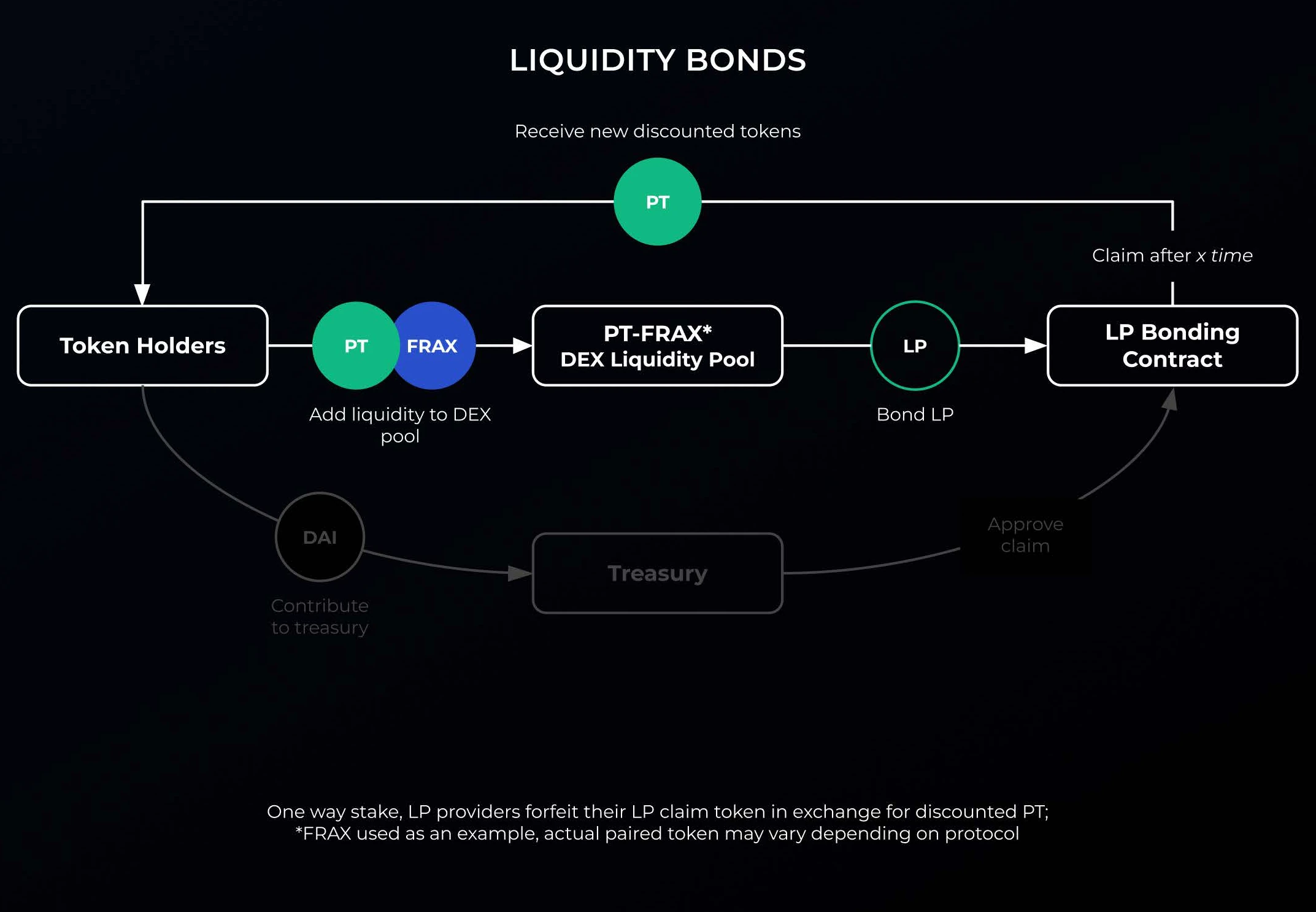
The proceeds generated from the sale of the tokens are also handled a little differently from a typical token sale. Instead of being distributed to the platform for spending as it pleases, these currencies are directly contributed to a protocol’s liquidity pool on a DEX or for external yield generation.
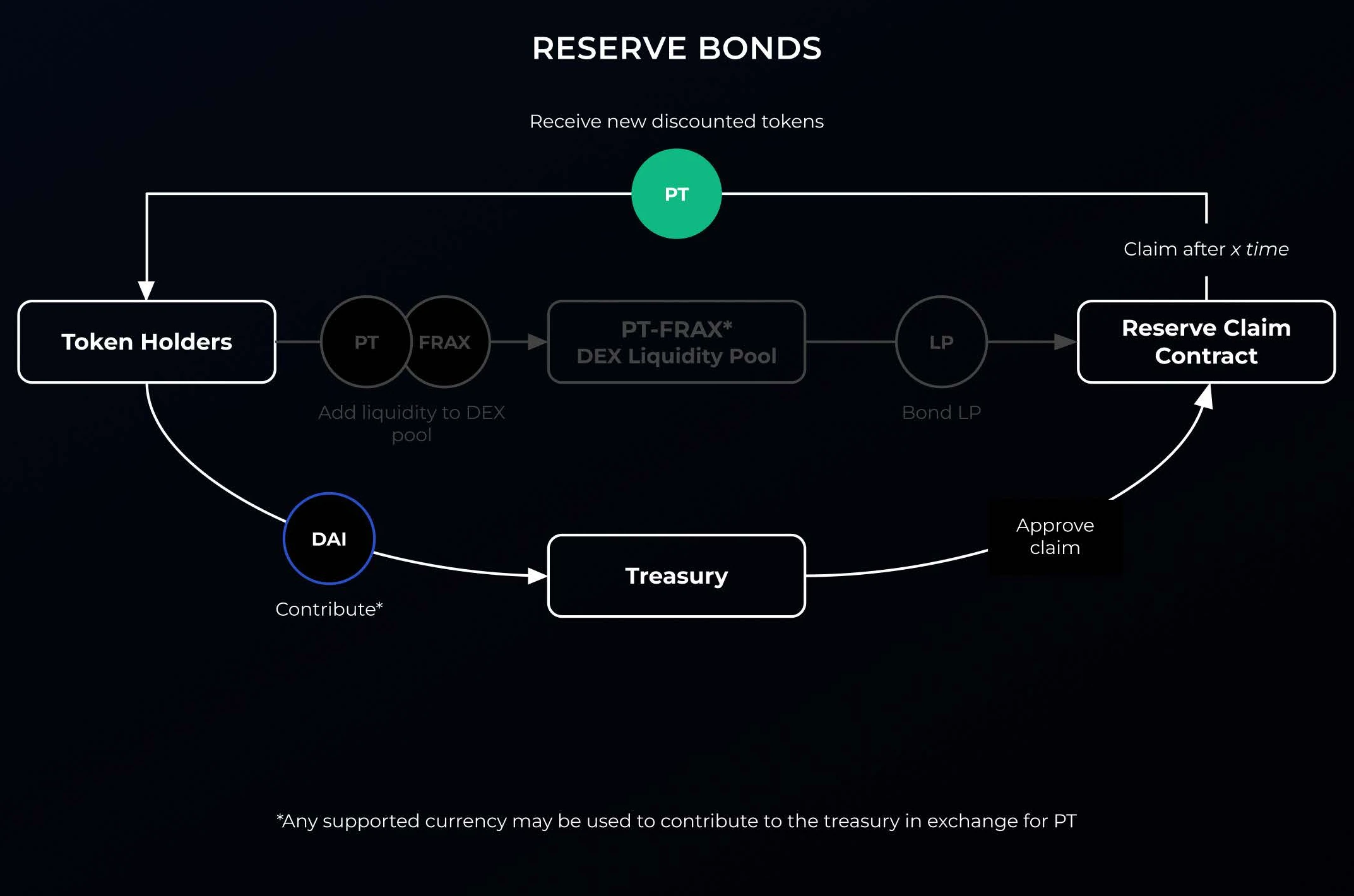
The idea here is that when proceeds are used to create a liquidity pool, the tokens operate like a reserve currency on a fractional reserve. The token is backed by the value of the liquidity pool, so theoretically the value of the issued token should not fall below the value of the protocol’s owned liquidity. The use of a stablecoin promotes stability, though ETH may be used also, and is expected to outperform stablecoins in a bull market.
Risk of Price Decline
As with most projects, early token buyers may wish to capitalize on any price appreciation from their investment and may ultimately wish to sell their tokens. However, the selling of tokens in the automated marking making liquidity pool results in a corresponding reduction in liquidity, while also causing the price of the token to drop. This might create a self-fulfilling prophecy, leading to additional sell pressure, causing the equivalent of a run on a bank.
Price Erosion from High Yields
To counteract this, Olympus DAO incentivizes users to stake and hold the OHM token by providing extremely high yields (as high as 200,000% APY at its peak, after compounding), perhaps the highest yield offered by any token of its size and scale. Such high yields are only possible by creating newly minted tokens. In the case of OHM, new tokens are printed indiscriminately to sustain the substantial yield, resulting in significant dilution of existing token holders. As these new circulating tokens may eventually end up as sold tokens, rapid price declines can be expected to follow.
Reserve Backing
In ecosystems that utilize protocol-owned liquidity, the main selling point to token buyers and holders is that the issued currency is backed by a reserve of cryptocurrency assets, theoretically offering price protection. However, this price protection is only guaranteed on each protocol-issued token on a 1:1 basis against the reserve assets held. So, for an ecosystem that holds USD 100M in liquidity, for example, the protocol can only back 100M issued tokens at USD 1.00 each. In the case of OHM, for most of its issued life, it has traded at a substantial premium to its reserve price, peaking at USD 1,415.26. Thus, the reserve backing claims are misleading, as the price protection offered is only a small fraction of the market value. Furthermore, to execute on this claim, the protocol would have to burn more tokens than it holds, as the majority of tokens are held in user’s actual wallets within the circulating supply. Depending on the way the token contract is set up, either this cannot be done at all, or it can be done, but at the detriment of token holders. Tokens would have to be burned out of their wallet on a pro-rata basis until enough tokens are burned to match the reserve backing. Based on a cursory review of the OHM token contract, the burn function appears enabled, allowing the creator to burn user’s tokens as it sees fit.
The greater question is, why would such a token trade at a premium to its reserve value, especially as the token has very limited economic value beyond this?
Price Performance Exclusively a Function of Demand
Based on the above economic analysis, the price premium must then be exclusively a function of demand that is greater than the current supply. This means there is no other substantial business model to power token value accrual. Such protocols may claim that yields generated by farming out its reserves help to establish a revenue source for rebasing but considering a substantial portion must be held in liquidity and therefore remain unusable, the actual value generated may be significantly less than what the price may suggest. New token buyers payout old holders, with the price escalating based only on an influx of participants. Should the net inflows of buyers be less than the outflows of sellers, the price will collapse. This is essentially what we have seen play out on OHM following its price peak.