
Tokens with transaction taxes, sometimes called a “reflection tax” are ones in which a fee is automatically collected from each transaction. More specifically, each time the transfer function is called within a token contract, a set fee, expressed as a percentage of the total transaction value is deducted from the transfer and sent to one or more pre-defined addresses set by the protocol. The following activities are examples of events that invoke the transfer function in a token contract and therefore result in the transaction tax:
- Purchase or sale of tokens on a DEX
- Sending tokens between wallets
- Adding or removing liquidity from a DEX
- Claiming staking rewards
- Distribution of rewards and pool tokens
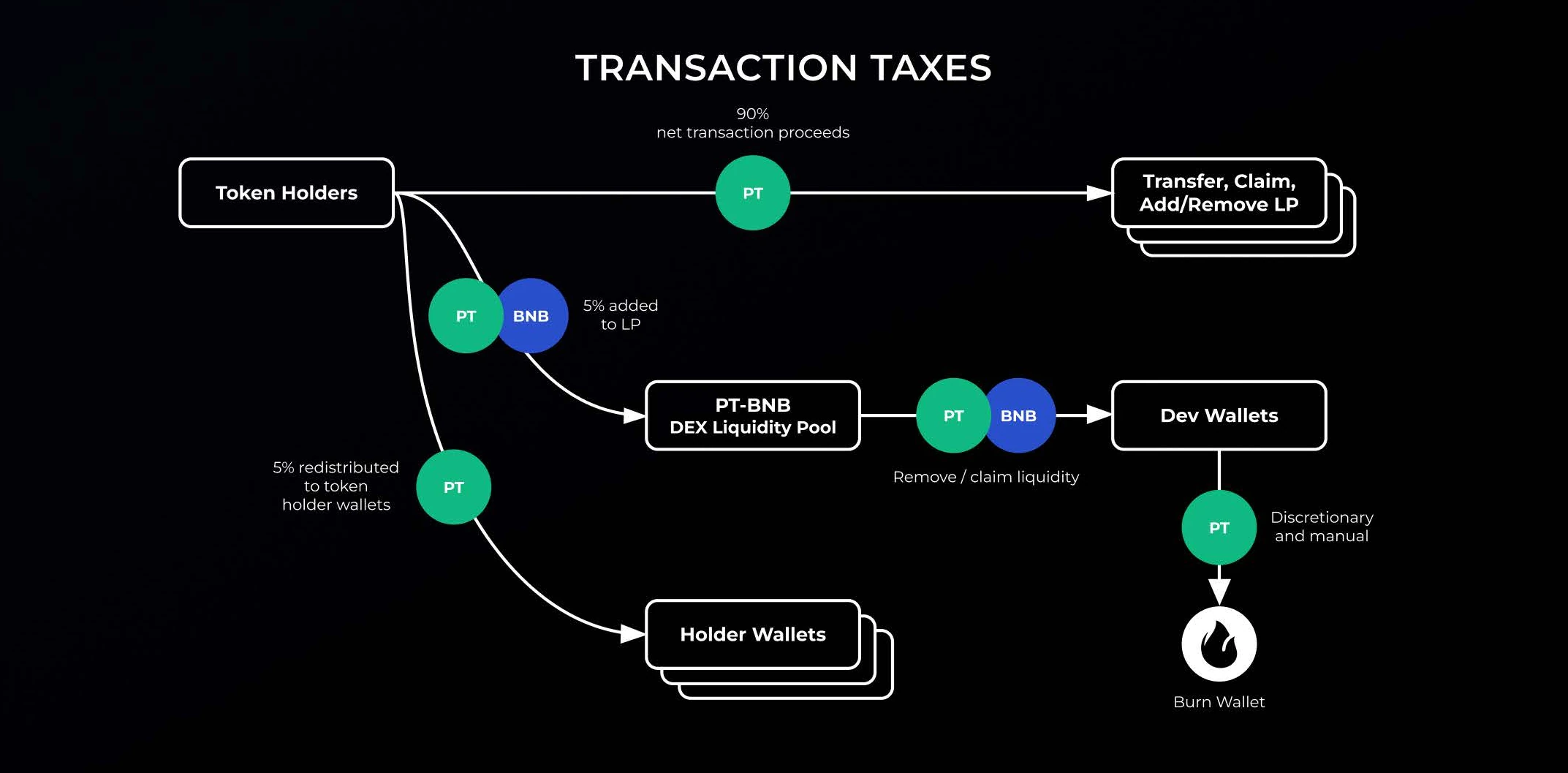
The concept of the transaction tax was originally pioneered by Reflect Finance and made popular by Safemoon. It has been used in numerous other projects since then. The taxes collected in each transaction are often distributed to a number of protocol-controlled wallets, with at least some portion being redistributed to existing token holders. If the idea of using newly collected fees and distributing them to existing holders sounds familiar, then it means you're familiar with how Ponzis work.
Disincentivizing Transactions
Perhaps the use of the word tax within its terminology was not the best move for Safemoon and other related projects. While the term is, perhaps, the most accurate description of what is occurring, like other taxes we’re familiar with, these taxes greatly disincentivize the transactor or taxpayer from performing any activities in the network. Thus, most transactions are relegated to new and existing participants buying into the token, or others exiting out. Each of these events incurs a tax, so a user needs to be careful about how frequently they perform these activities.
In the example below, we can see that with just 10 transactions, a single holder can lose nearly 65% of their principal value in transaction taxes, not including blockchain gas fees and redistributions.
| Transaction Number | Starting Value | Tax Deducted | Ending Value |
|---|---|---|---|
| 1 | 10.0000 | 1.0000 | 9.0000 |
| 2 | 9.0000 | 0.9000 | 8.1000 |
| 3 | 8.1000 | 0.8100 | 7.2900 |
| 4 | 7.2900 | 0.7290 | 6.5610 |
| 5 | 6.5610 | 0.6561 | 5.9049 |
| 6 | 5.9049 | 0.5905 | 5.3144 |
| 7 | 5.3144 | 0.5314 | 4.7829 |
| 8 | 4.7829 | 0.4782 | 4.3046 |
| 9 | 4.3046 | 0.3874 | 3.9172 |
| 10 | 3.9172 | 0.3917 | 3.5255 |
Table illustrating the principal erosion due to transaction taxes; rounded to the nearest ten-thousandths
Favor Large Dormant Wallets
Although 50% of these taxes are redistributed to existing holders, this occurs on a pro-rata basis, so a small holder will receive substantially less of these fees. Transaction taxes favor large dormant wallets such as those owned by the protocol or its developers. These large wallets receive a larger portion of the tax collections while paying a relatively small portion, due to their inactivity. Transaction taxes negatively affect small holders who trade frequently, such as speculators that are entering and exiting token ownership.
Favor Protocol and Devs
Safemoon and other similar projects enable claiming of liquidity assets by a "dev wallet" which is essentially a protocol-owned wallet maintained by the developers and founders. These funds are supposedly utilized to pay for protocol development, maintenance, and marketing fees – though in practice we have seen substantial abuse of such funds by their projects. Still, we do not see this as a fault of this business model, except where such fee collection far exceeds what is needed to maintain the protocol.
No Actual Business Model
Perhaps the greatest critique of tax-based protocols is that absent any other features, there’s no actual business model other than to siphon fees from buyers and sellers. In this case, no economic value is created or added, and the ecosystem can be thought of as zero-sum. Thus, for every amount made by a participant, an equal amount must be lost by another. It is for this reason that we feel such protocols are merely dressed up Ponzis and should be avoided.