
The decision to use a fixed supply or mintable token is one of the most critical of any token ecosystem. Since this is a decision that must be made prior to minting the token contract, a new project should understand the pros and cons of each, and why one might be better to use than the other. It may be tempting to create a token with an unlimited supply "just in case" but such a decision will have important ramifications for the potential future economic value of that token.
To understand the significance between these two types of token economies, we must first understand what each of them is.
Fixed Supply – as the name implies, is a fixed supply token is property of the token contract in which a finite and definitive supply of tokens is minted upon instantiation of the token contract. The fixed supply value (the number of tokens) is defined by the project and coded into the contract. A true fixed supply token will have this value “hard coded,” meaning the value cannot be changed in the future by an upgradable contract.
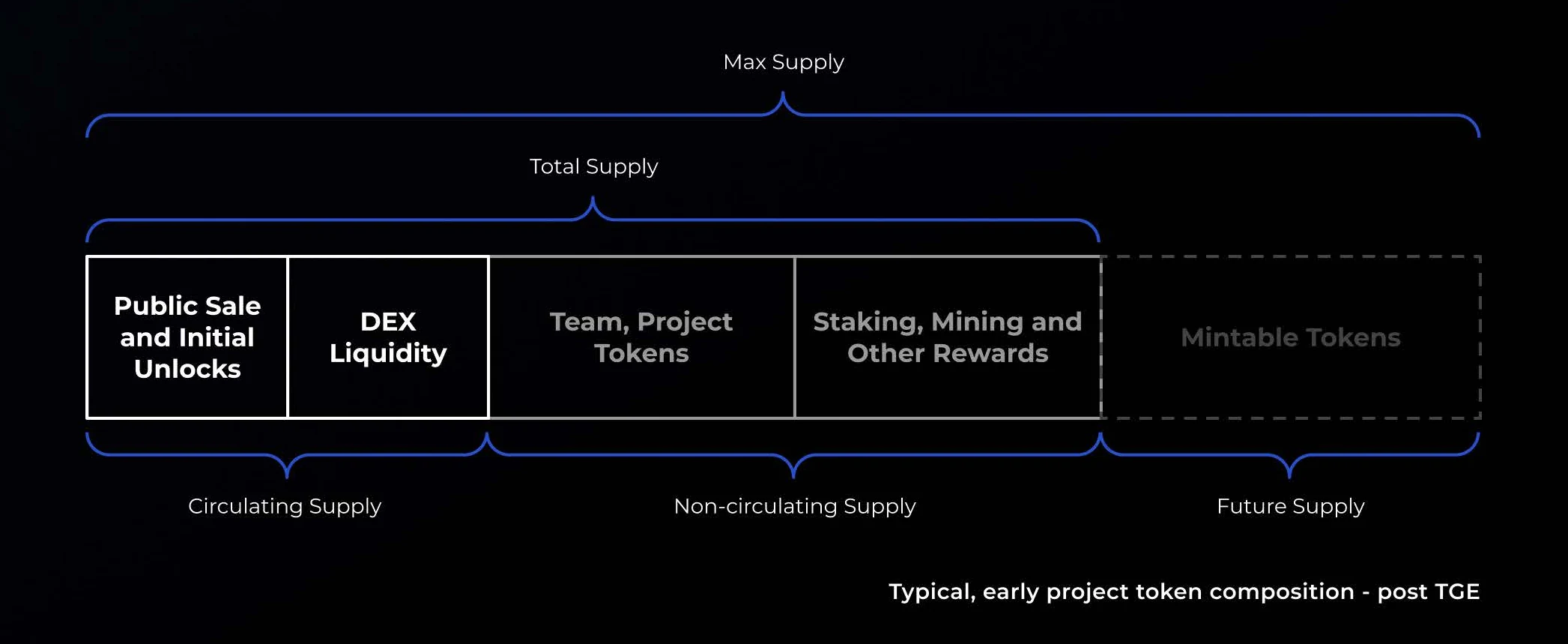
Fixed Supply tokens have two important properties:
Initial Supply – the number of tokens that are minted upon instantiation of the contract
Max Supply – the total amount of tokens that can be minted
Most fixed supply tokens set these two values as the same, that is, the initial supply is also the max supply. When done this way, the minting function can be disabled, as no new tokens need to be created. When the initial supply is less than the max supply, then new tokens can be introduced into circulation up until the max supply is reached. Either way, setting a finite total supply makes the token a fixed supply token.
Mintable Token – in the context of token economics, a mintable token is further qualified to be an infinitely mintable token, that is, a token in which the contract has no specified max supply and has the mint function enabled. This allows the token creator to create as many new tokens as needed.
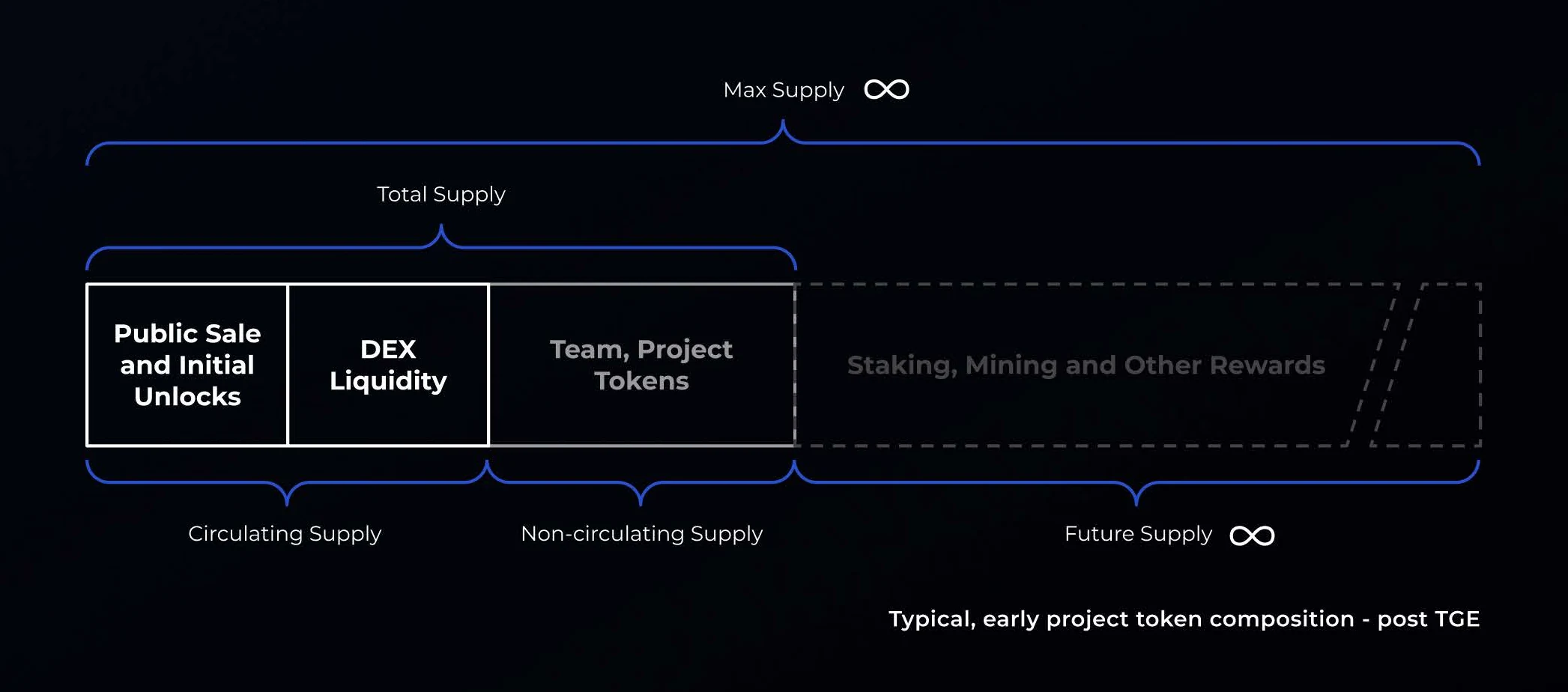
Now that we understand these two primary token types, we can evaluate the differences between the two in a token ecosystem.
Why are Mintable Tokens Used?
An infinitely mintable token prevents a platform from “running out” of its tokens in the near or far future, by allowing new tokens to be created as needed. It’s use is governed by the mint.sol function of a token contract which has been around since the first token contract was created. While there may be many uses for it, it is primarily attributed to rewards and incentive programs created by token ecosystems.
Mining – for base-layer blockchain solutions, mining is a useful feature to incentivize distributed consensus-generated block formation. As work needs to be performed and resources leased to a blockchain network, the protocol must pay for these in order to maintain a long-lasting ecosystem. Since these ecosystems are intended to run near indefinitely, a finite supply of tokens may not be feasible, as the token incentive program would eventually run out. Perhaps the best-known example of a mintable token economy designed for mining rewards is Ethereum itself. In an update called “The Merge,” proof-of-work mining rewards have been converted over to proof-of-stake validation rewards through the use of token staking, but the need for block validation rewards remains unchanged. These rewards are powered by new tokens created through minting.
Community Rewards – many new token economies rely on some sort of reward system to incentivize their community to participate. These participation rewards may be critical to the functionality of the ecosystem and the expectation of its participants. Some examples include play-to-earn and engage-to-earn rewards, and others might include governance or staking-related rewards. A project may wish to have an unlimited source of rewards to perpetually incentivize its community. Thus, a mintable token is often used to assure that these reward programs can pay out for as long as they are needed, without concern for “running out” of reward tokens.
While there are many more examples of why a mintable token might be created, the above should provide some clarity as to the purpose of such an ecosystem.
Things to look out for
Mintable token economies must pay special attention to the number of new tokens introduced into circulation by their reward economies. A project with a poor understanding of token economics might be tempted to mint tokens indiscriminately with the expectation of printing new value out of thin air. However, as we will learn in subsequent sections, the unabated creation of new tokens into the supply will invariably lead to hyperinflation resulting in a catastrophic decline in the token value.
Additionally, the rate of minting is also an important consideration here. The creation of new tokens for rewards might not negatively impact the price if the inflation rate is low. Case in point, Ethereum’s inflation rate has declined to around 0.52% after The Merge, representing a reduction of 88% from pre-Merge levels. At this rate, validators are still rewarded via consensus layer issuance (via staking), with minimal price impact related to inflation.
Inflation rates are also negatively affected by compounding – the more tokens that are in circulation, the greater the volume of new tokens that need to be minted to have the same net economic effect. As you can imagine, this can present runaway scenarios at scale.
The rationale for minting should also be carefully evaluated. Minting for community rewards, staking, and validating might be looked at more favorably than to benefit the team or platform directly. However, minting to a responsible party is almost always better for price protection in the short term than to aggressive token sellers.
The Case for a Fixed Supply Token
Fixed supply tokens do not suffer from the same deleterious long-term effects of mintable token economies. However, in the short term, fixed supply tokens are also subject to the effects of inflation. This is because, in most typical offerings, a substantial proportion of the total issued supply may be locked in vesting contracts and made to distribute into the circulating supply over time. Even a conservative unlock schedule might overwhelm a thinly traded token, exacerbating the effects of inflation.
However, all things equal, a fixed supply token will eventually reach the conclusion of its unlock, vesting, and dispersal events, resulting in all tokens being "fully diluted" into the circulating supply. Thus, at some point, no further inflationary effects will be present in a fixed token supply.
Perhaps one of the more important decisions in a fixed supply token is how to manage the need for a reward economy with a token that has a finite supply. In mintable token economies, since there’s a limitless supply of tokens, much less discipline is needed. With a fixed supply of tokens, the supply can run out, resulting in the discontinuance of a reward system. Thus, for ecosystems that rely on a long-term reward mechanism, careful planning and thought are needed to preserve the fixed supply to enable this.
So far, the only mechanism that enables reward systems to continue without the token supply running out is one that has an external economic value injection system that enables these token reserves to be replenished. This almost certainly requires that fixed supply tokens build more economically robust token economies to keep their prices sustainable. Thus, a fixed supply token needs a better-designed model and is therefore likely to perform better than a mintable token economy in the long run.